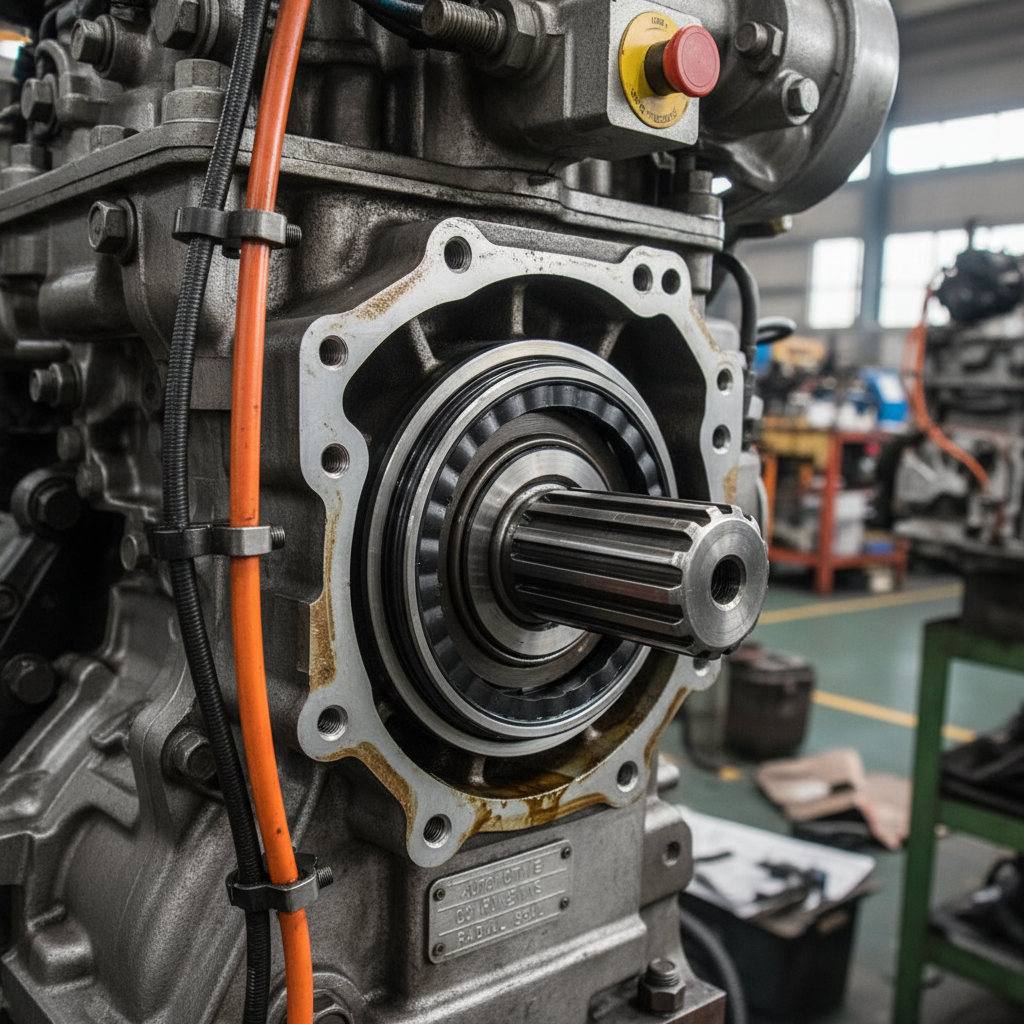
Replacing a worn-out oil seal is often seen as a minor maintenance task, yet the discrepancy in car oil seal price can vary significantly based on material grade, OEM specifications, and the specific engine component being protected.
Whether it is a crankshaft seal preventing catastrophic oil loss or an axle shaft seal protecting the transmission, the cost is rarely just about the rubber component itself; it encompasses the precision of the fit and the longevity of the material under extreme thermal stress.
This analysis examines the factors influencing pricing in the automotive sealing market, the technical trade-offs between budget and premium options, and how to identify a value-driven procurement strategy for essential engine components.

The Role of Sealing in Engine Integrity

Oil seals are the unsung guardians of the automotive powertrain. Their primary function is to retain lubricants within the system while simultaneously excluding contaminants like dust, water, and debris from entering critical bearing surfaces.
When evaluating a car oil seal price, it is essential to understand that these components are subject to constant friction and thermal cycling. A failure in a crankshaft oil seal (such as part 90311-50017) can lead to rapid oil depletion, potentially resulting in total engine seizure.
Technical Drivers of Pricing Variance
Pricing in the oil seal market is driven primarily by the precision of the molding process and the quality of the elastomers used. Low-cost seals often utilize generic nitrile rubber (NBR), which performs adequately in mild temperatures but degrades under the high heat found in modern, high-compression engines.
In contrast, premium seals often employ Viton (FKM) or specialized fluorocarbon blends. These materials offer superior chemical resistance to synthetic oils and can withstand significantly higher operating temperatures, which justifies a higher initial cost by extending the service interval of the vehicle.
Furthermore, the inclusion of a reinforced metal case and a precision-engineered garter spring ensures that the seal maintains constant radial pressure against the rotating shaft. This mechanical stability is a critical factor that separates industrial-grade OEM seals from generic aftermarket alternatives.
Material Science and Component Lifespan
The relationship between the chemical composition of a seal and its operational life is linear. Seals used in axle shafts, such as the 91206-RCT-003, are exposed to different stresses than those in the oil pump. Axle seals must deal with more external contaminants and mechanical shocks, requiring a more robust outer lip design.
The true cost of a seal is measured not by its purchase price, but by the total cost of ownership, which includes the labor for installation and the potential risk of engine damage due to premature leakages.
Advanced manufacturers, like Xingtai Huimao Trading Co., Ltd., focus on independent core technology to optimize the balance between hardness and flexibility. This ensures that the seal does not harden over time—a common failure point in budget seals that leads to "brittle leaks."
Cost-Benefit Index of Seal Grades
When analyzing the car oil seal price across different grades, we see a clear correlation between material investment and performance reliability. Budget options provide short-term fixes, while professional-grade seals are designed for the full lifecycle of the engine overhaul.
The following index represents a relative assessment of durability versus initial cost, demonstrating that while the cost increases slightly with grade, the reliability index grows exponentially.
Figure 2. Seal Grade Performance vs. Relative Cost Index
Common Application Scenarios
In a typical industrial repair setting, the choice of oil seal is dictated by the specific failure mode of the vehicle. For instance, in high-mileage fleet vehicles, the use of crankshaft oil seals like the 90311-45003 or 90311-34010 is common during timing belt replacements to avoid future teardowns.
For axle shaft maintenance, technicians prioritize seals like the MD755904, which must withstand the centrifugal forces and debris of road travel. In these scenarios, opting for a low car oil seal price often leads to repeat labor costs, making professional-grade rubber sealing parts the more economical choice in the long run.
Future Trends in Sealing Technology
The automotive industry is shifting toward lower friction coefficients to improve fuel efficiency. This is driving the development of PTFE-coated seals and low-friction lip designs that reduce parasitic drag on the crankshaft and camshaft.
Furthermore, the rise of synthetic, ultra-low viscosity oils requires seals that can maintain a tight bond with much "thinner" lubricants. This necessitates a change in the elastomer's chemical structure to prevent seepage through the molecular gaps of the rubber.
We also expect a move toward more integrated sealing solutions, where the seal and the housing are optimized as a single unit to eliminate the risk of misalignment during installation, which is one of the leading causes of early seal failure.
Selection Framework for Buyers
Selecting the correct oil seal requires a balance between the intended use of the vehicle and the budget available. For daily commuters, standard OEM-grade seals are usually sufficient. However, for heavy-duty transport or performance engines, the technical specifications must be scrutinized.
Buyers should prioritize seals that offer documented fitment for their specific OEM part number, such as the 12279-D0100 for crankshafts or 91233-PT0-003 for oil pumps, to ensure there is no gap in the sealing interface.
The following table provides a decision matrix for evaluating different sealing options based on typical automotive requirements.
| Requirement | Budget Option (NBR) | Professional Option (FKM) | Recommendation |
|---|---|---|---|
| Temp Resistance | Low to Medium | High / Extreme | FKM for Engine Core |
| Chemical Stability | Standard Oils | Synthetic / Aggressive | FKM for Synthetics |
| Installation Life | Short Term | Long Term / Lifecycle | Professional for Overhauls |
| Fit Precision | General Tolerances | Exact OEM Fit | OEM Spec for Crankshaft |
| Initial Cost | Lowest | Moderate to High | Budget for Temporary Fix |
| Risk of Leakage | Moderate | Very Low | Professional for Axles |
Questions & Answers
The price is determined by three primary factors: the material used (e.g., NBR vs. Viton), the manufacturing precision of the metal housing, and the specific OEM requirements. High-performance seals that can withstand extreme heat and synthetic lubricants cost more due to the expensive raw elastomers and the tighter tolerances required for a leak-proof fit.
This depends on where the leak is located. Crankshaft seals are located at the ends of the engine's crankshaft and prevent engine oil from leaking. Axle seals (like the 91206-PK4-003) are located where the axle enters the differential or transmission, preventing gear oil from escaping and keeping road grime out of the drivetrain.
It is not recommended. Budget seals made of standard nitrile rubber (NBR) can harden and crack when exposed to prolonged high temperatures. This leads to premature failure and oil leaks. For high-temperature environments, fluorocarbon (FKM) seals are necessary as they maintain elasticity and sealing pressure under heat.
The most obvious sign is an oil leak appearing at the junctions of rotating shafts. For crankshaft seals, you will see oil dripping from the front or rear of the engine block. For axle seals, oil will often coat the inner side of the wheel or leak from the axle boot area. A drop in oil levels without an obvious source is also a key indicator.
Yes, especially for critical components like the crankshaft. The labor cost to replace a seal is often much higher than the price of the seal itself. Using a high-quality, OEM-spec seal ensures that you won't have to pay for the same labor again in a few months due to a failed budget part.
No. Lifespan varies based on the rubber compound, the lubrication quality, and the operating environment. A seal used in a clean, temperature-controlled environment will last longer than one exposed to road salt and extreme heat. Higher-grade materials like FKM significantly extend the operational life compared to NBR.
Final Thoughts
Understanding the nuances of car oil seal price reveals that the cheapest option is rarely the most economical. By prioritizing material compatibility and OEM precision, vehicle owners and fleet managers can avoid the costly cycle of premature failures and repeated labor.
As automotive engines become more efficient and operate under higher stresses, the reliance on advanced elastomer technology will only grow. Investing in professional-grade sealing solutions is the most effective way to ensure long-term engine reliability and operational safety.