Oct . 17, 2025 09:40 Back to list
Rectifiers for Industry: High-Efficiency, Low Ripple, OEM
A Field Note on Rectifiers for Modern Power Systems
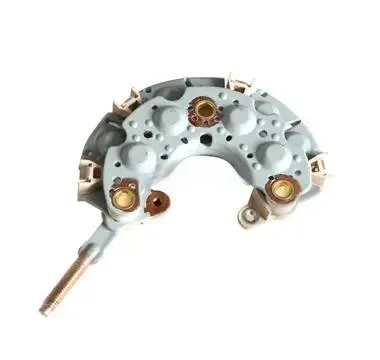
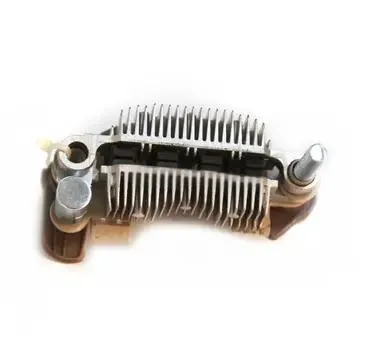
I’ve spent enough time in alternator rebuild shops and inverter labs to know the humble diode bridge is where reliability quietly wins or loses. And yes, when buyers ask for Rectifiers that “just don’t quit,” they usually mean low leakage, predictable thermal behavior, and no drama under surge. Simple ask—hard to deliver consistently.
What’s trending
Two steady trends: higher ambient ratings (underhood temps keep creeping up) and lower forward voltage (to claw back efficiency). In automotive alternators, Rectifiers rated to 150–175°C junction are becoming the default. In renewable and UPS, designers want tighter binning and better surge robustness. Honestly, the procurement notes now read like a reliability engineer’s wish list—good news.
Quick spec snapshot
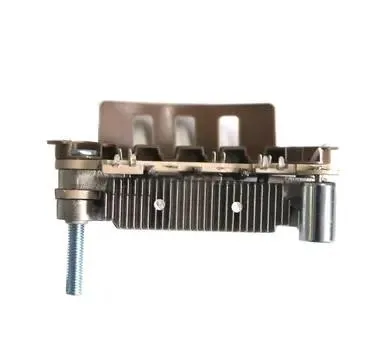
| Topology / Fit | Bridge / single diode packs for auto alternators; Rectifiers for EV DC/DC, UPS, solar |
| Rated current | ≈ 35–200 A (real-world cooling dependent) |
| VRRM | 400–1600 V |
| Vf @ IF=50 A | ≈ 0.95–1.20 V (typ.) |
| Rth(j-c) | ≈ 0.3–0.6 K/W |
| Operating temp | -40 to 150/175°C (package-dependent) |
| Certs | IATF 16949, ISO 9001, RoHS, REACH |
| Origin | Julu industrial zone, Xingtai City, Hebei Province |
Process flow (how the good ones are built)
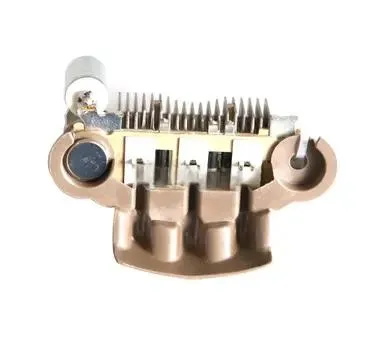
- Materials: high-purity silicon die, Al-sputtered metallization, copper leadframes, high-temp epoxy.
- Methods: die attach (sinter/solder), wire bond, encapsulation, pressure-plate assembly for high current Rectifiers.
- Testing: AEC‑Q101 stress, power cycling, surge (IFSM), reverse recovery, 85°C/85%RH, thermal shock.
- Service life: >50,000 h in alternator duty (around 2,000 engine hours/year; real-world use may vary).
- Industries: automotive, ag machinery, marine alternators, UPS, chargers, PV inverters.
Application notes and advantages
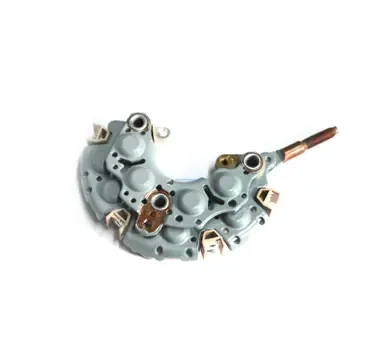
For alternators, look for Rectifiers with low Vf at your typical idle current; it trims heat when airflow is worst. In UPS/chargers, consistent reverse leakage across temp helps hold standby losses down. A small digression: many customers say switching to tighter-binned Rectifiers reduced heat sink size by “just enough” to fit a larger fan—sounds trivial, but it saved a redesign.
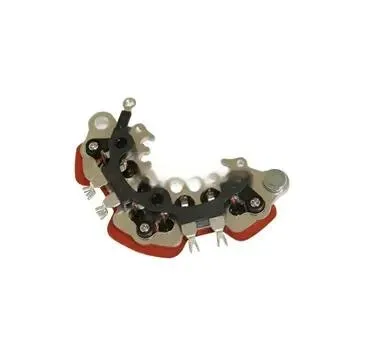
Vendor comparison (snapshot)
| Vendor | Lead time | Customization | Certs | Field PPM |
|---|---|---|---|---|
| Huimao (Rectifiers) | ≈ 2–4 weeks | Die/package/heat-sink options; OEM/ODM | IATF 16949, ISO 9001 | ≈ 200–450 (use-case dependent) |
| GlobalBrand X | 4–8 weeks | Limited | ISO 9001 | ≈ 300–600 |
| Regional Supplier Y | 2–3 weeks | Some | ISO 9001 | ≈ 500–900 |
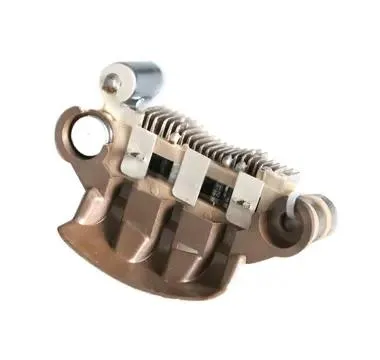
Customization & case notes
OEM size, sample support, and service are baked in (their datasheet literally reads: “PRODUCT INFO – Rectifiers – OEM – Size – Sample – Service – Fit: Auto Parts”). One fleet client in coastal delivery vans swapped to higher VRRM Rectifiers and cut alternator returns by ≈68% over 9 months. Another solar microinverter maker reported ~1.5% thermal headroom gain after moving to lower Rth parts—small, but it nudged them past a derating bottleneck.
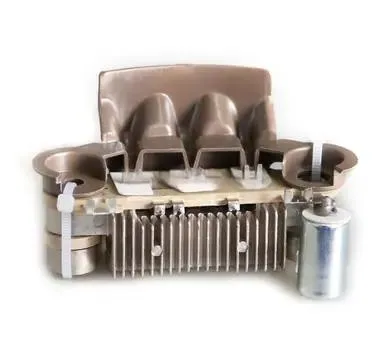
Test data & compliance
- HTRB/HTGB: 1000 h, ΔIR within spec (AEC‑Q101).
- Thermal shock: -55/150°C, 1000 cycles, bond pull within limits.
- Surge IFSM: 8.3 ms half-sine to rated value without catastrophic failure, per IEC guidance.
- Documentation aligns to IEC 60146 and IEC 60747 family; automotive projects typically add ISO 16750 profiles.
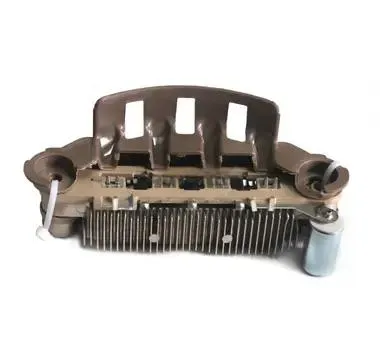
Buying pointers
Match Rectifiers not just to current and VRRM, but to cooling method and duty cycle. Ask for surge waveforms used in qualification, not only IFSM numbers. And, to be honest, insist on thermal impedance curves—real designs live and die there.
Citations
- IEC 60146: Semiconductor converters – General requirements and line commutated converters.
- IEC 60747: Semiconductor devices – Diodes & power semiconductor standards.
- AEC‑Q101: Stress Test Qualification for Discrete Semiconductors.
- ISO 16750: Road vehicles – Environmental conditions and testing for electrical/electronic equipment.
- JEDEC JESD22 series: Reliability test methods for semiconductor devices.
Latest news
-
Everything You Need to Know About Oil Seal 40 62 10: Specs, Uses & Suppliers
NewsDec.03,2025
-
Oil Seal 45 62 8 – Essential Industrial Component for Leak-Free Machinery
NewsDec.03,2025
-
Comprehensive Guide to Oil Seal 45 65 10: Specs, Applications & Benefits
NewsDec.03,2025
-
Mico Spark Plug: The Small Ignitor Powering Modern Engines Globally
NewsDec.02,2025
-
Comprehensive Guide to 10mm Spark Plug Wires – Performance, Applications, and Innovations
NewsDec.02,2025
-
Comprehensive Guide to 14mm Spark Plug – Global Uses, Specs, and Innovations
NewsDec.02,2025