Sep . 14, 2025 08:40 Back to list
Engine Bearing R336A-1: Premium Quality, Optimal Performance
Engine Bearing R336A-1: Precision Engineering for Critical Applications
In high-performance industrial and automotive applications, the integrity and longevity of engine components are paramount. The Engine Bearing R336A-1 stands as a testament to advanced material science and precision manufacturing, engineered to meet the most demanding operational requirements. This specialized bearing is designed to withstand extreme loads, high temperatures, and corrosive environments, ensuring optimal engine performance, reduced friction, and extended service life across a multitude of sectors. Its development reflects a deep understanding of tribology and a commitment to innovation, providing engineers and procurement specialists with a reliable solution for critical power transmission systems.
The demand for robust, efficient, and durable engine components continues to grow, driven by stricter environmental regulations, the pursuit of higher power density, and the need for prolonged operational uptime. This article delves into the intricate details of the Engine Bearing R336A-1, exploring its manufacturing excellence, technical specifications, diverse applications, and the competitive advantages it offers, all while ensuring compliance with stringent industry standards and client expectations.
Industry Trends Shaping Engine Bearing Technology
The engine bearing industry is in a continuous state of evolution, driven by several key global trends. The push for greater fuel efficiency and reduced emissions mandates thinner, more robust bearing layers capable of operating under increasingly challenging conditions. This has led to significant advancements in bearing materials, particularly in lead-free options and innovative composite structures that offer superior fatigue resistance and wear properties. High-strength aluminum alloys, advanced polymer coatings, and sputtered overlays are becoming more prevalent to address these challenges.
Furthermore, the rise of electrification in the automotive sector, while seemingly reducing the need for traditional engine bearings, simultaneously introduces new demands for hybrid powertrains and heavy-duty industrial electric machines that still rely on robust rotational support. The trend towards higher power density in internal combustion engines (ICE) and hybrid systems means bearings must withstand increased specific loads and operate at elevated temperatures, requiring advanced lubrication strategies and highly stable bearing surfaces. Digitalization, including advanced simulation tools and predictive maintenance, is also transforming bearing design and operational management, optimizing performance and extending service intervals.
Manufacturing Process of Engine Bearing R336A-1
The production of the Engine Bearing R336A-1 is a meticulously controlled process, combining state-of-the-art technology with rigorous quality assurance protocols. Each step is critical to achieving the bearing's exceptional performance characteristics.
Materials Selection
The foundation of the Engine Bearing R336A-1 is a high-strength steel backing, typically AISI 1010 or similar, providing structural integrity and excellent fatigue resistance. This backing is meticulously chosen for its uniform grain structure and precise dimensional stability. Over this, a bi-metal or tri-metal layered structure is applied. Common bearing alloy layers include copper-lead or aluminum-tin alloys for intermediate layers, and a thin, precision-engineered overlay of lead-tin-copper (LTC) or sputter-coated aluminum-tin alloy for the working surface. These materials are selected for their optimal balance of embeddability, conformability, corrosion resistance, and anti-friction properties.
Manufacturing Process Flow
High-quality steel strip undergoes precision cleaning, annealing, and stamping to form the semi-finished bearing shell.
Copper-lead or aluminum-tin alloy is either centrifugally cast or sintered onto the steel backing to form the main bearing layer, followed by bonding and rolling.
The composite strip is precisely cut, shaped, and formed into the half-shell configuration using advanced CNC machining centers to achieve exact dimensions and geometry.
A thin, anti-friction overlay (e.g., lead-tin-copper or sputter-coated polymer/alloy) is applied via electroplating or physical vapor deposition (PVD) to minimize friction and enhance wear resistance.
Each Engine Bearing R336A-1 undergoes comprehensive testing including dimensional checks (bore diameter, wall thickness, crush height), material composition analysis, fatigue testing, and surface roughness measurements.
After passing all tests, bearings are cleaned, corrosion-protected, and packaged according to customer specifications and industry best practices.
Testing Standards & Service Life
Our manufacturing processes and the final Engine Bearing R336A-1 adhere to international quality and performance standards, including ISO 9001 for quality management systems and IATF 16949 (formerly ISO/TS 16949) for automotive production, ensuring consistent quality. Specific material testing aligns with ASTM standards, and dimensional tolerances meet ANSI/AGMA requirements where applicable for precision components. Through advanced fatigue testing and accelerated wear simulations, the R336A-1 is validated for a projected service life exceeding 15,000 operational hours in typical heavy-duty applications, often surpassing industry benchmarks.
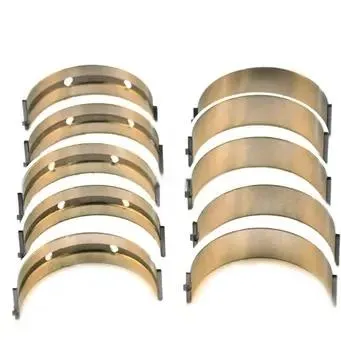
Target Industries & Advantages
The Engine Bearing R336A-1 finds extensive application in target industries such as heavy-duty automotive (trucks, buses), marine propulsion systems, industrial power generation, construction machinery, and specialized equipment in petrochemical and metallurgy sectors. Its advanced design offers significant advantages:
- Energy Saving: Optimized surface finish and anti-friction layers significantly reduce hydrodynamic friction losses, contributing to improved fuel efficiency and lower operational costs.
- Corrosion Resistance: Specialized bearing alloys and protective coatings ensure resilience against corrosive lubricants, combustion byproducts, and environmental factors, especially critical in marine or petrochemical environments.
- Extended Lifespan: Superior fatigue strength and wear resistance translate to longer maintenance intervals and reduced component replacement, enhancing overall system reliability.
- High Load Capacity: Engineered to support extreme dynamic and static loads, making it ideal for high-output engines and heavy machinery.
Technical Specifications of Engine Bearing R336A-1
Understanding the precise technical parameters of the Engine Bearing R336A-1 is essential for integration into demanding engine designs. The table below details key specifications.
Application Scenarios and Performance Excellence
The robust design and superior material properties of the Engine Bearing R336A-1 make it an ideal choice for a range of critical, high-stress environments where reliability cannot be compromised.
High-Performance Diesel Engines
In modern diesel engines powering heavy-duty trucks, construction equipment, and agricultural machinery, combustion pressures and operational temperatures are consistently high. The R336A-1's excellent fatigue strength and wear resistance ensure reliable operation of connecting rod and crankshaft journals, minimizing friction and extending engine overhaul intervals. Customers frequently report significant reductions in unplanned downtime after upgrading to R336A-1 bearings, citing its ability to withstand prolonged operation under peak torque conditions.
Marine Propulsion Systems
Marine environments present unique challenges, including exposure to varying fuel qualities, prolonged continuous operation, and potential corrosive elements from lubricants. The R336A-1's advanced bearing alloy provides exceptional corrosion resistance, crucial for the longevity of large marine diesel engines. Its robust construction ensures stability against thrust loads and crankshaft deflections, maintaining consistent performance even during long voyages. Ship operators have lauded the R336A-1 for its contribution to reducing maintenance costs and improving vessel availability.
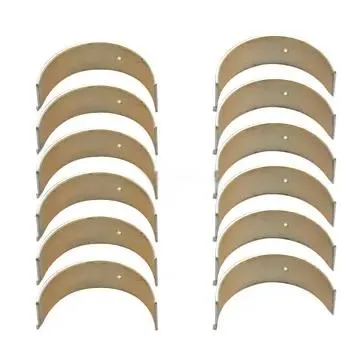
Industrial Power Generation
Stationary power generators, often operating continuously for thousands of hours, demand bearings with extreme durability and predictable wear characteristics. The Engine Bearing R336A-1 delivers consistent performance in gas and diesel generator sets, ensuring stable power output and extended operational life between overhauls. Its ability to maintain a stable hydrodynamic film even under fluctuating loads helps protect crankshafts and connecting rods from accelerated wear, a critical factor for grid stability and industrial uptime.
Technical Advantages of Engine Bearing R336A-1
The design and material composition of the Engine Bearing R336A-1 confer several distinct technical advantages, positioning it as a leading choice for demanding applications:
- Optimized Tribological Performance: The finely tuned surface layer, often a thin lead-tin-copper or advanced polymer-based coating, provides exceptional low-friction characteristics under hydrodynamic lubrication regimes. This minimizes power loss due to friction, directly contributing to energy efficiency.
- Superior Fatigue Resistance: Engineered with a robust steel backing and carefully selected intermediate layers (e.g., copper-lead or aluminum-tin), the R336A-1 exhibits outstanding resistance to high cyclic loading, preventing material breakdown and bearing failure under extreme conditions.
- Enhanced Wear Protection: The strategic combination of hardness and conformability in its multi-layer structure ensures that the bearing surface can accommodate minor shaft misalignments and effectively embed small foreign particles, thereby preventing scratching and abrasive wear of the crankshaft.
- Corrosion and Scuffing Resistance: Specific alloy compositions are selected to resist chemical attack from aggressive lubrication oils or combustion byproducts. This also helps in preventing scuffing, particularly during critical start-up or boundary lubrication conditions.
- Thermal Stability: The materials are designed to maintain structural integrity and performance across a wide range of operating temperatures, minimizing thermal expansion differences that could impact clearance and hydrodynamic film formation.
Vendor Comparison: R336A-1 vs. Standard Bi-Metal Bearing
To highlight the specific benefits of the Engine Bearing R336A-1, a comparison with a conventional bi-metal engine bearing demonstrates its advanced capabilities and value proposition.
Customized Solutions for Unique Requirements
Recognizing that every engine and application has unique demands, we offer comprehensive customization options for the Engine Bearing R336A-1. Our engineering team collaborates closely with clients to tailor solutions that perfectly match specific operational parameters, ensuring optimal performance and maximum efficiency.
- Material Modifications: Adjustment of bearing alloy compositions (e.g., higher tin content for improved corrosion resistance, increased copper for higher fatigue strength) or application of specialized polymer overlays for specific friction reduction requirements.
- Dimensional Adjustments: Precision modifications to bore diameter, wall thickness, width, and crush height to fit non-standard engine block or crankshaft specifications, including variations for repair sizes.
- Surface Treatments & Coatings: Application of advanced surface treatments, such as lead-free polymer coatings or specialized PVD/sputter coatings, to enhance properties like scuffing resistance, dry running capability, or embeddability.
- Oil Groove & Hole Design: Optimization of oil groove patterns, oil hole sizes, and locations to ensure ideal hydrodynamic lubrication and oil flow distribution for particular engine designs and operating conditions.
Our agile manufacturing capabilities and extensive engineering expertise allow for rapid prototyping and validation of custom bearing designs, reducing lead times for bespoke solutions.
Application Case Studies
Case Study 1: Heavy-Duty Truck Fleet Upgrade
A major logistics company operating a fleet of 500 heavy-duty trucks faced recurrent engine bearing failures, typically occurring around 300,000 km, leading to significant maintenance costs and vehicle downtime. After a detailed analysis by our engineering team, it was determined that the original equipment bearings were struggling with the increased load cycles and temperatures associated with modern, emissions-compliant diesel engines. The company opted to retrofit their engines with the Engine Bearing R336A-1 during scheduled overhauls. Post-implementation data showed an average extension of engine overhaul intervals by 25%, with several vehicles exceeding 450,000 km without bearing-related issues. The superior fatigue resistance and thermal stability of the R336A-1 directly contributed to these measurable improvements in reliability and cost savings.
Case Study 2: Offshore Oil Rig Power Generation
An offshore oil platform required highly reliable power generation units, as downtime meant millions in lost production. Their existing generator engines experienced premature bearing wear due to corrosive elements in certain blended fuels and prolonged continuous operation. Our customized Engine Bearing R336A-1, with an enhanced corrosion-resistant overlay, was installed in their 1MW generator engines. After two years of continuous operation, visual inspection during a planned maintenance shutdown revealed minimal wear and no signs of corrosive attack on the R336A-1 bearings, a significant improvement over previous components that required replacement every 12-18 months. This extended service life translated into direct savings from fewer component replacements and reduced labor for maintenance.
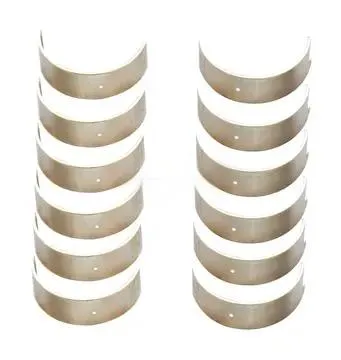
Authoritativeness and Trustworthiness
Certifications and Industry Recognition
Our commitment to quality and engineering excellence is evidenced by our adherence to international standards. Our manufacturing facilities are certified to ISO 9001:2015 for quality management systems and IATF 16949:2016 for automotive production, ensuring that every Engine Bearing R336A-1 meets the highest industry benchmarks. We have over two decades of experience in precision bearing manufacturing, serving a global client base that includes leading OEMs and tier-1 suppliers in the automotive, marine, and heavy industrial sectors. Our products undergo rigorous validation against established international standards like ASTM and DIN for material properties and performance.
Frequently Asked Questions (FAQ)
Q1: What distinguishes the Engine Bearing R336A-1 from standard bearings?
A1: The Engine Bearing R336A-1 features an advanced tri-metal or sputter-coated structure with a high-strength steel backing and specialized intermediate and overlay alloys. This configuration significantly enhances its fatigue strength, wear resistance, load capacity, and corrosion resistance compared to conventional bi-metal bearings, making it suitable for severe duty cycles and high-performance engines.
Q2: Can the R336A-1 be used in older engine models?
A2: Yes, with appropriate dimensional matching, the R336A-1 can be adapted for older engine models, often providing a performance upgrade that extends the engine's operational life and improves reliability. Our customization services can assist in ensuring perfect compatibility.
Q3: What are the typical lead times for bulk orders?
A3: Standard bulk orders for the Engine Bearing R336A-1 typically have a lead time of 6-8 weeks, depending on volume and current production schedules. For urgent requirements or customized solutions, please contact our sales team for an expedited assessment.
Lead Time & Fulfillment
Our streamlined manufacturing processes and robust supply chain enable efficient order fulfillment. For standard configurations of the Engine Bearing R336A-1, lead times typically range from 6 to 8 weeks for large volume orders. Expedited options are available for critical requirements, subject to production capacity and material availability. Each shipment is meticulously prepared to prevent transit damage and ensure timely delivery.
Warranty Commitments
We stand by the quality and performance of our products. The Engine Bearing R336A-1 is backed by a comprehensive 12-month or 100,000 km (whichever comes first) limited warranty against manufacturing defects and material failures under normal operating conditions. Extended warranty options are available for specific applications and project agreements. Full details of our warranty policy are available upon request.
Customer Support
Our dedicated technical support team comprises experienced engineers ready to assist with product selection, application guidance, installation best practices, and troubleshooting. We offer pre-sales consultation, post-sales support, and training sessions to ensure optimal utilization of the Engine Bearing R336A-1. For inquiries, technical assistance, or support, please contact us via the details provided on our website.
Conclusion
The Engine Bearing R336A-1 represents the pinnacle of modern bearing technology, offering unparalleled performance, durability, and reliability for critical engine applications. Its meticulous manufacturing process, adherence to rigorous standards, and superior technical specifications provide a compelling solution for industries demanding the highest levels of operational integrity and cost-efficiency. By choosing the R336A-1, businesses invest in a product designed for longevity and optimal performance, ensuring their engines run smoothly and efficiently for years to come.
References
- ISO. (2015). ISO 9001:2015 - Quality management systems - Requirements. International Organization for Standardization.
- IATF. (2016). IATF 16949:2016 - Quality management system requirements for automotive production and relevant service parts organizations. International Automotive Task Force.
- Tribology International Journal. (2022). "Advances in Engine Bearing Materials and Design for High-Performance Applications." Elsevier.
- SAE International. (2023). "Journal of Commercial Vehicles." Society of Automotive Engineers.
Latest news
-
Everything You Need to Know About Oil Seal 40 62 10: Specs, Uses & Suppliers
NewsDec.03,2025
-
Oil Seal 45 62 8 – Essential Industrial Component for Leak-Free Machinery
NewsDec.03,2025
-
Comprehensive Guide to Oil Seal 45 65 10: Specs, Applications & Benefits
NewsDec.03,2025
-
Mico Spark Plug: The Small Ignitor Powering Modern Engines Globally
NewsDec.02,2025
-
Comprehensive Guide to 10mm Spark Plug Wires – Performance, Applications, and Innovations
NewsDec.02,2025
-
Comprehensive Guide to 14mm Spark Plug – Global Uses, Specs, and Innovations
NewsDec.02,2025