Oct . 01, 2025 12:10 Back to list
Vacuum Pump for Brake System: Quieter, Stronger, Safer?
Inside the Brake-Ready Vacuum Pump: Trends, Specs, and Real-World Results
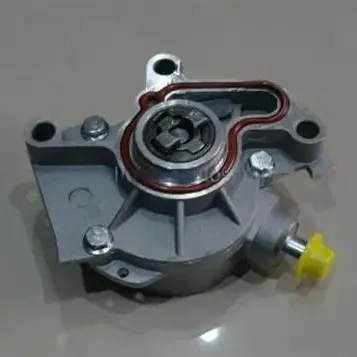
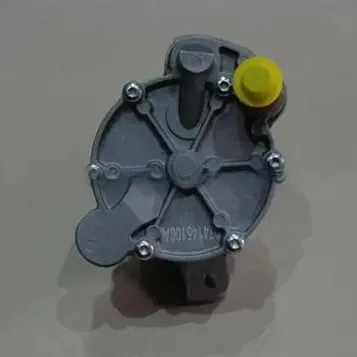
If you work around braking systems, you already know the quiet hero is the Vacuum Pump. Not flashy, but when it fails, you feel it in the pedal instantly. Lately I’ve been hearing from OEMs and fleet managers that they want higher efficiency, tighter leak rates, and plug-and-play integration with modern ECUs. Makes sense—hybrids and start-stop engines don’t always deliver stable manifold vacuum, so auxiliary pumps are stepping in.
What it is and where it’s built
This particular Vacuum Pump (Brake System) comes out of Julu Industrial Zone, Xingtai City, Hebei Province. I’ve visited the area—lots of machining talent and robust supply chains. The company positions it for passenger cars, light trucks, and commercial vehicles, but I’ve also seen it repurposed in off-road equipment where reliable brake assist is non-negotiable.
Quick specification snapshot
| Model | Brake-system Vacuum Pump, 12/24 V DC (OEM-capable) |
| Pumping speed (S) | ≈ 20–35 L/min (real-world use may vary; per ISO 21360) |
| Ultimate pressure | -85 to -93 kPa (gauge), typical for brake boosters |
| Noise | ≈ 62–70 dB(A) at 1 m |
| Materials | Aluminum alloy housing; FKM/NBR seals; oil-less design option |
| Service life | ≈ 8,000–15,000 h under nominal load; duty-cycled |
| Certifications | IATF 16949 (plant-level), ISO 9001; RoHS-compliant components |
Where it’s used (and why)
- Brake boosters in gasoline, diesel, hybrid, and EV platforms
- Start-stop systems needing steady assist on restart
- Heavy-duty fleets needing consistent pedal feel in long idles
- Secondary vacuum for HVAC actuators or EGR valves (occasionally)
Advantages? Faster vacuum recovery, better pedal consistency, and—surprisingly—some customers report improved NVH versus legacy vane pumps. I’d say results depend on mounting and hose routing, but the trend holds.
How it’s made: process flow (short version)
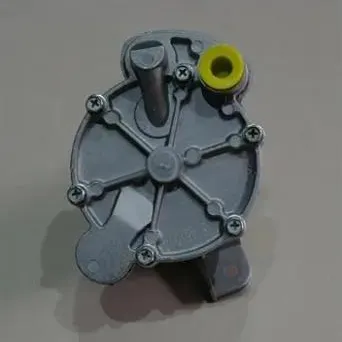
Materials: die-cast aluminum housing, precision-ground rotor/vanes (or diaphragm set), FKM/NBR seals rated for brake-fluid adjacent environments. Methods: CNC machining, automated seal insertion, dynamic balancing (≈ ISO 21940 guidance), and end-of-line vacuum bench tests per ISO 21360. Leak testing: helium or pressure decay with thresholds around ≤ 1×10^-3 mbar·L/s. Electrical: 100% functional testing (current draw, PWM response if equipped). Traceability via QR/laser marking.
Testing standards touchpoints: IATF 16949 quality system; performance aligned to FMVSS 135/UN R13 brake-assist scenarios. Service-life rigs cycle hot/cold (-30°C to +120°C housing temp spikes) until flow drops beyond spec.
Vendor comparison (what to look for)
| Vendor | Certifications | Lead time | Customization | Warranty |
|---|---|---|---|---|
| Huimao (Vacuum Pump) | IATF 16949, ISO 9001 | ≈ 3–6 weeks | Ports, harness, bracket, PWM | 12–24 months |
| Brand A | ISO 9001 | 6–10 weeks | Limited | 12 months |
| Brand B | IATF 16949 | 4–8 weeks | Moderate | 12–18 months |
Customization and integration
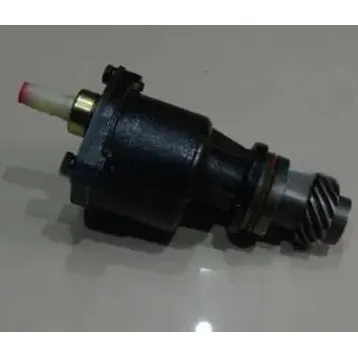
For the Vacuum Pump in brake systems, the most requested tweaks are bracket geometry, hose barb size (or quick-connects), NVH isolation bushings, and ECU-friendly PWM mapping. Some fleets ask for extended harnesses with sealed connectors (IP67+). To be honest, spending an extra hour on mounting isolation saves weeks of NVH complaints later.
Field notes and case studies
A regional bus operator retrofitted 80 units; booster vacuum now stabilizes at ≈ -90 kPa within 2–3 s after idle drops, cutting “hard pedal” incidents to near zero. Another aftermarket installer in the EU switched to this Vacuum Pump for small EV vans—reported 12% lower failure rate over 18 months versus their previous supplier. Customers also mention predictable current draw, which matters for EV range math.
Bottom line
If your platform relies on consistent brake assist, a spec-compliant, properly mounted Vacuum Pump is the simplest insurance policy. Check the standards alignment, verify leak/flow data, and push for real end-of-line test sheets—ideally with ISO 21360 references and traceable serials. It’s the boring paperwork that keeps drivers safe.
Authoritative citations
Latest news
-
Everything You Need to Know About Oil Seal 40 62 10: Specs, Uses & Suppliers
NewsDec.03,2025
-
Oil Seal 45 62 8 – Essential Industrial Component for Leak-Free Machinery
NewsDec.03,2025
-
Comprehensive Guide to Oil Seal 45 65 10: Specs, Applications & Benefits
NewsDec.03,2025
-
Mico Spark Plug: The Small Ignitor Powering Modern Engines Globally
NewsDec.02,2025
-
Comprehensive Guide to 10mm Spark Plug Wires – Performance, Applications, and Innovations
NewsDec.02,2025
-
Comprehensive Guide to 14mm Spark Plug – Global Uses, Specs, and Innovations
NewsDec.02,2025