Oct . 25, 2025 12:50 Back to list
Solenoid Switch – Heavy-Duty, Fast, Waterproof, OEM
A field insider’s look at the Solenoid Switch that keeps fleets moving
If you spend time around engine bays—or order desks—you know how pivotal a Solenoid Switch can be. It’s the unglamorous part that decides whether a starter engages cleanly or your hydraulic circuit wakes up on time. I visited suppliers across northern China this year, and one factory in the julu industrial zone,xingtai city,hebei province stood out for consistent coil winding and surprisingly tidy QA notes. Small thing, big impact.
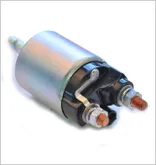
What it is and where it’s used
In simple terms, a Solenoid Switch converts electrical current into linear motion to close high-current contacts. You’ll see it in starter systems, winches, forklifts, compact tractors, even marine auxiliaries. Many customers say they just want “no click-no start” headaches gone—and, honestly, a well-sealed housing and consistent contact plating do most of that heavy lifting.
- Automotive starters and glow-plug relays
- Construction and AG equipment power relays
- Marine battery isolation and windlass control
- Industrial hydraulic manifold actuation
Specs that matter (and why)
The model I handled is positioned for Auto Parts replacement, with OEM cross references listed below. In fact, you can spec voltages and brackets to taste; just watch the coil resistance and duty cycle for heat rise in tight compartments.
| Parameter | Typical Value (real-world use may vary) |
| Operating Voltage | 12 VDC or 24 VDC |
| Coil Resistance | ≈ 3.0–4.5 Ω (12 V), ≈ 10–16 Ω (24 V) |
| Contact Rating | ≈ 100–200 A continuous; up to 600 A inrush (seconds) |
| Ingress Protection | IP54–IP67 options (per IEC 60529) |
| Operating Temp | -40 to +105 °C (ISO 16750 profiles) |
| Service Life | ≈ 100k–300k cycles at rated load |
| OEM Cross-Refs | 0331303145; 0269112870; 331303002 (representative) |
Materials, build, and test flow
Materials: oxygen-free copper windings, low-carbon steel plunger, silver-alloy contacts, and NBR or FKM seals. Methods: automated coil winding, vacuum impregnation for thermal stability, CNC-machined core, and ultrasonic cleaning before assembly. Validation: salt spray ≈ 96–240 h (ASTM B117), thermal shock per ISO 16750, vibration per SAE J1455, and dielectric withstand. Sample lab note: at 14.2 V, 85 °C underhood, contact drop stayed Solenoid Switch.
Customization menu (the practical bits)
- Voltage, coil resistance, and duty cycle tuning
- Connector type (spade, stud, sealed plug), bracket geometry
- Contact plating thickness for high-inrush loads
- Logo, labeling, carton and pallet specs for OEM/ODM
Vendor landscape—how they compare
| Aspect | Huimao (Hebei) | Importer A | Premium Brand |
| Origin | julu industrial zone,xingtai city,hebei province | Mixed | EU/US |
| Lead Time | ≈ 20–35 days | ≈ 45–60 days | ≈ 30–45 days |
| Customization | High (ODM welcome) | Low–Medium | Medium |
| Certs | ISO 9001; can align to IATF 16949 docs | Varies | IATF 16949 |
| Warranty | ≈ 12–18 months | ≈ 6–12 months | ≈ 24 months |
Field notes and mini case studies
A bus fleet maintenance lead told me their starter engagement lag dropped after switching to a sealed Solenoid Switch; the main win was lower contact pitting in humid months. Another case: a small ag OEM needed a 24 V coil with tighter hold current to protect batteries during long idles—coil wind tweaks solved it without touching the bracket geometry. In both stories, the boring stuff (coil QC, sealing) made the difference.
Standards to ask about (so you sound like you’ve been here before)
- IATF 16949 for automotive quality systems
- ISO 16750 environmental profiles (thermal/vibration)
- IEC 60529 IP ratings for dust/water ingress
- SAE J1455 for on-highway equipment validation
Bottom line: If you want a reliable, quiet-click Solenoid Switch for starters or auxiliary power, look beyond glossy catalogs and check coil data, plating thickness, and validation notes. It sounds nerdy—because it is—but that’s what keeps engines cranking when the weather turns.
Latest news
-
Everything You Need to Know About Oil Seal 40 62 10: Specs, Uses & Suppliers
NewsDec.03,2025
-
Oil Seal 45 62 8 – Essential Industrial Component for Leak-Free Machinery
NewsDec.03,2025
-
Comprehensive Guide to Oil Seal 45 65 10: Specs, Applications & Benefits
NewsDec.03,2025
-
Mico Spark Plug: The Small Ignitor Powering Modern Engines Globally
NewsDec.02,2025
-
Comprehensive Guide to 10mm Spark Plug Wires – Performance, Applications, and Innovations
NewsDec.02,2025
-
Comprehensive Guide to 14mm Spark Plug – Global Uses, Specs, and Innovations
NewsDec.02,2025