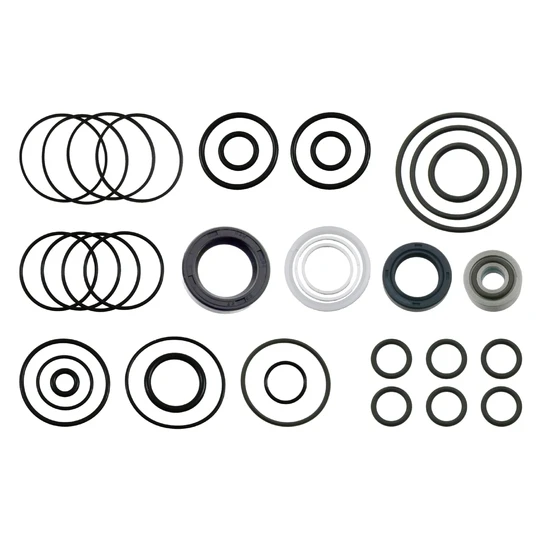
High-Performance ptfe oil seal Solutions for Venezuela's Automotive Industry

Engineered for extreme durability and precision sealing in the demanding automotive engine environments of South America.

High-Performance ptfe oil seal Solutions for Venezuela's Automotive Industry

Providing advanced sealing technology to optimize engine efficiency and reduce downtime for automotive manufacturers and repair hubs across Venezuela.

Sealing Challenges in Venezuela's Automotive Sector

Analyzing the impact of tropical humidity and economic volatility on automotive component longevity.

In Venezuela, the automotive industry faces unique environmental pressures. High ambient temperatures and tropical humidity accelerate the degradation of standard oil seal rubber part components, leading to premature leakage in heavy-duty engines used for logistics and transportation.

The local market is currently characterized by a mix of aging vehicle fleets and a growing need for high-quality replacement parts. This has increased the demand for durable oil seals that can withstand varied lubricant qualities and erratic maintenance schedules common in the region.

Furthermore, the industrial focus on oil-rich regions requires specialized sealing for engine components that operate under extreme thermal cycling, making the transition to high-grade synthetic materials a necessity for local automotive sustainability.
Evolution of Automotive Sealing Technology

From basic rubber compounds to advanced fluoropolymers.

Market Development History

Until the early 2000s, the Venezuelan automotive market relied heavily on traditional NBR (Nitrile Butadiene Rubber) seals. These provided basic protection but lacked the thermal resistance needed for the high-performance engines entering the market during the economic boom.

Between 2010 and 2020, there was a strategic shift toward hydraulic oil seal advancements, integrating Viton and other FKM materials to handle higher temperatures and more aggressive chemical additives in modern synthetic oils.

Currently, the market is entering a phase of "Precision Sealing," where the integration of PTFE and reinforced composites has become the standard for reducing friction and extending the service life of engine valves and crankshafts.

Future Development Trends

Low-Friction Polymers

Increasing adoption of modified PTFE to reduce parasitic power loss in engines, directly improving fuel efficiency in Venezuelan urban transport.

Smart Material Integration

Development of seals with embedded wear-indicators to allow predictive maintenance, reducing the risk of catastrophic engine failure.

Eco-Compatible Elastomers

Shift toward bio-based rubber parts that maintain high sealing integrity while reducing the environmental footprint of automotive manufacturing.

Future Trends and Industry Outlook

Strategic projections for the automotive sealing market in South America.

Extreme Heat Resistance
Developing seals specifically for the high-ambient heat of Venezuelan summers to prevent thermal hardening.
Chemical Compatibility
Enhanced resistance to various low-grade fuels and recycled oils commonly used in local automotive repair.
Precision Manufacturing
Implementing tighter tolerances in valve oil seal production to ensure zero leakage in modern engines.
Supply Chain Agility
Optimizing logistics to ensure rapid delivery of critical sealing components to Venezuelan industrial hubs.

Industry Outlook

Based on search trend data for automotive maintenance in South America, there is a significant increase in queries regarding "leak prevention" and "long-life engine parts." This indicates a market shift towards quality-driven purchasing rather than price-driven replacements.

Over the next 3-5 years, we expect the Venezuelan market to demand higher concentrations of PTFE-based seals to support the transition toward more efficient, lower-emission engine configurations required by emerging regional regulations.

Localized Application Scenarios in Venezuela

Real-world deployments of advanced sealing solutions across various automotive sectors.

01. Heavy-Duty Cargo Transport

Implementation of reinforced hydraulic oil seal systems in long-haul trucks transporting goods from Caracas to Maracaibo, ensuring reliability despite extreme road vibrations.

02. Urban Public Transit Fleets

Use of high-durability valve seals in municipal bus engines to reduce oil consumption and emissions in densely populated urban areas.

03. Industrial Engine Maintenance

Upgrading aging generator sets in industrial zones with high-temperature PTFE seals to prevent lubricant leakage during continuous operation.

04. Agriculture Machinery

Applying weather-resistant rubber parts to tractors and harvesting equipment used in the Venezuelan plains to resist dust and moisture infiltration.

05. Luxury Vehicle Aftermarket

Providing precision-engineered seals for high-end imports, ensuring original equipment manufacturer (OEM) standards are met during engine overhauls.

Brand Story

Global Development Journey of Xingtai Huimao Trading Co., Ltd.

Founding Vision

Established with a mission to solve the most critical leakage problems in the automotive engine sector through material innovation.

Technical Breakthrough

Perfected the fusion of rubber and PTFE, creating hybrid seals that offer both flexibility and extreme heat resistance.

Global Expansion

Expanded our footprint into South America, tailoring our product line to the specific climatic needs of the Venezuelan market.

Quality Certification

Achieved international standards for automotive components, ensuring every seal meets rigorous pressure and temperature tests.

Sustainability Commitment

Now focusing on green manufacturing and biodegradable sealing materials to support the global transition to sustainable transport.

Complete Sealing Portfolio for the Venezuelan Market

A comprehensive range of engine and hydraulic seals designed for maximum reliability in South American conditions.

Frequently Asked Questions in Venezuela

Expert answers to common technical queries regarding automotive sealing components.

How to choose the right oil seals for high-temperature engines in Venezuela?

For high-temperature environments, we recommend Viton (FKM) or PTFE-based seals, as they resist thermal hardening better than standard nitrile rubber.

What is the lifespan of a high-quality oil seal rubber part in tropical climates?

Depending on the material and maintenance, a high-quality rubber part can last 50,000 to 100,000 km, provided the lubricant is changed regularly.

Why are hydraulic oil seal leaks common in Venezuelan construction machinery?

Leaks often occur due to contaminated oil and extreme dust. Using reinforced seals with integrated dust lips can significantly reduce this issue.

Can a valve oil seal be replaced without a full engine teardown?

Yes, in many modern engines, specialized tools allow for the replacement of valve seals through the cylinder head, reducing labor costs.

What are the advantages of using a ptfe oil seal over rubber?

PTFE offers significantly lower friction, higher chemical resistance, and can withstand temperatures that would melt traditional rubber seals.

How do I identify a genuine high-performance seal for automotive use?

Check for consistent surface finish, clear material markings, and certification documentation proving the polymer composition.

Request a Technical Consultation

Our engineers are ready to provide tailored sealing solutions for your automotive projects in Venezuela.

Contact Us Now

If you are interested in our products, you can choose to leave your information here, and we will be in touch with you shortly.