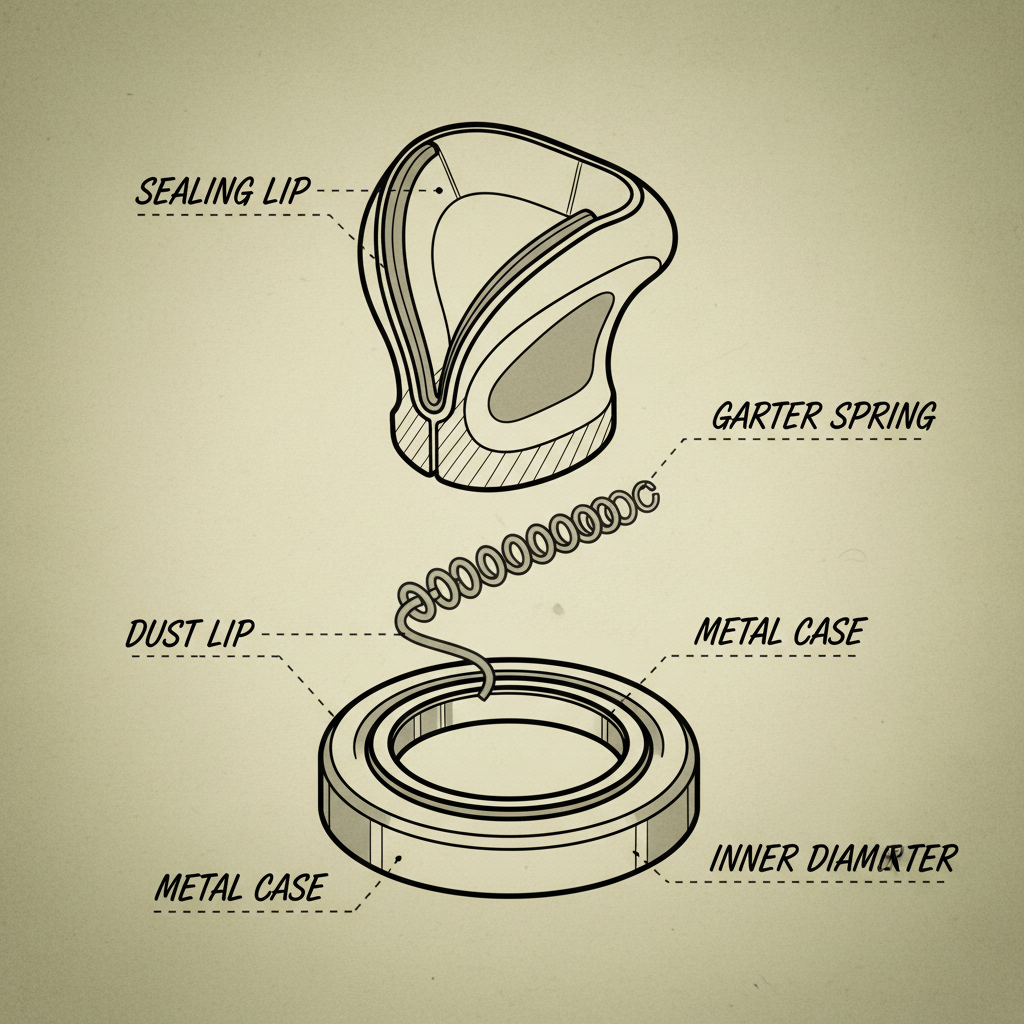
In the precision-driven world of automotive engineering, the integrity of sealing components is paramount to vehicle longevity and performance. The oil seal 40 62 10 represents a critical standard in fluid containment, ensuring that lubricants remain within the engine system while preventing external contaminants from entering sensitive mechanical zones.
Across global manufacturing hubs, the demand for high-tolerance sealing solutions has surged as engine designs become more compact and operate under higher thermal loads. Understanding the technical specifications of an oil seal 40 62 10 allows engineers to minimize friction and prevent catastrophic oil leaks that could otherwise lead to engine seizure or environmental hazards.
By integrating advanced material science with rigorous industrial standards, the modern oil seal 40 62 10 serves as a silent guardian of engine efficiency. Whether applied in passenger vehicles or heavy-duty machinery, these components are essential for maintaining the hydraulic pressure and lubrication necessary for seamless automotive operation.
Global Relevance of Oil Seal 40 62 10
The global automotive supply chain relies heavily on standardized components to ensure interoperability and safety. The oil seal 40 62 10 is a prime example of such standardization, where precise dimensions (40mm inner diameter, 62mm outer diameter, and 10mm thickness) are critical for a perfect fit across various engine brands and models.
In accordance with ISO quality standards, the implementation of high-grade seals reduces the global environmental footprint by preventing oil seepage into the ecosystem. As the automotive industry transitions toward more sustainable practices, the efficiency of an oil seal 40 62 10 in extending the life of engine lubricants becomes a key metric for operational sustainability.
Technical Definition and Core Meaning
At its core, the oil seal 40 62 10 is a radial shaft seal designed to retain lubricants and exclude contaminants. The nomenclature "40 62 10" explicitly defines the geometric boundaries of the component, which is vital for procurement and installation in high-precision automotive assemblies.
Beyond the numbers, this component represents the intersection of chemistry and physics. It typically utilizes an elastomer lip that maintains a constant pressure against a rotating shaft, creating a leak-proof barrier. For the modern automotive technician, the oil seal 40 62 10 is the primary line of defense against internal engine wear.
In a broader industrial context, this seal is not merely a piece of rubber and metal; it is a critical safety component. A failure in an oil seal 40 62 10 can lead to sudden loss of oil pressure, causing immediate mechanical failure and potentially hazardous road conditions due to oil spills.
Key Factors of Sealing Performance
Durability is the first benchmark for any oil seal 40 62 10. The material must withstand extreme temperature fluctuations—from sub-zero winter starts to the intense heat of a high-performance engine—without losing its elasticity or cracking.
Material compatibility is equally crucial. An oil seal 40 62 10 must be chemically resistant to various synthetic and mineral oils, as well as additives, ensuring that the seal does not degrade or swell when exposed to aggressive chemical environments.
Precision fitment ensures that the oil seal 40 62 10 provides a consistent seal without creating excessive friction. High friction leads to heat buildup, which can prematurely wear down the sealing lip and shorten the overall lifespan of the engine component.
Global Applications and Use Cases
The application of the oil seal 40 62 10 spans across multiple automotive sectors, from passenger cars in urban centers to heavy-duty transport in remote industrial zones. In these contexts, the seal is frequently employed in crankshafts, transmission systems, and axle assemblies where fluid retention is non-negotiable.
In regions with extreme climates, such as the Arctic or the Sahara, the reliability of the oil seal 40 62 10 is tested to the limit. For instance, in mining operations in remote Australia, these seals prevent abrasive dust from entering the drivetrain, thereby reducing downtime and maintenance costs for expensive machinery.
Performance Efficiency of Oil Seal 40 62 10 Variants
Long-Term Value and Reliability
Investing in a premium oil seal 40 62 10 translates directly into long-term cost savings. By preventing minor leaks from escalating into major engine overhauls, fleet managers can significantly reduce the Total Cost of Ownership (TCO) for their vehicle assets.
Beyond the financial metrics, the reliability of a high-quality oil seal 40 62 10 fosters trust between the manufacturer and the end-user. When a vehicle operates without leaks, it enhances the driver's sense of safety and dignity, knowing that the machinery is performing at its peak operational capacity.
Future Trends in Sealing Innovation
The evolution of the oil seal 40 62 10 is currently being shaped by the digital transformation of the automotive industry. We are seeing the emergence of "smart seals" embedded with micro-sensors that can monitor wear and tear in real-time, alerting operators before a failure occurs.
Sustainability is another driving force. New bio-based elastomers are being developed for the oil seal 40 62 10 to reduce reliance on petroleum-based plastics. These green materials aim to maintain the same high-pressure performance while being easier to recycle at the end of the vehicle's life cycle.
Furthermore, the shift toward electric vehicles (EVs) is redefining the role of the oil seal 40 62 10. While internal combustion engines are decreasing, the need for precision sealing in EV gearboxes and battery cooling systems remains critical, ensuring that high-voltage components remain isolated from lubricants.
Overcoming Common Sealing Challenges
One of the most frequent challenges associated with the oil seal 40 62 10 is improper installation, which can lead to immediate lip deformation. To solve this, many manufacturers are now providing precision installation tools and guided training to ensure the seal is seated perfectly perpendicular to the shaft.
Another common issue is shaft wear, where the rotating metal surface develops grooves that the oil seal 40 62 10 cannot bridge. Expert solutions include the use of "speed-rings" or shaft sleeves that provide a fresh, smooth surface for the seal to grip, extending the component's life without requiring a full shaft replacement.
Lastly, chemical degradation remains a hurdle. By conducting comprehensive fluid analysis, engineers can match the specific elastomer of the oil seal 40 62 10 to the exact chemical composition of the lubricant used, virtually eliminating the risk of premature material breakdown.
Technical Analysis of Oil Seal 40 62 10 Material Performance
| Material Type |
Temp Resistance |
Wear Rate |
Overall Score |
| NBR (Nitrile) |
Moderate (-40 to 120°C) |
Medium |
7.5 |
| FKM (Viton) |
High (-20 to 200°C) |
Low |
9.2 |
| Silicone |
Very High (-60 to 230°C) |
High |
8.0 |
| PTFE (Teflon) |
Extreme (-200 to 260°C) |
Very Low |
9.8 |
| EPDM |
Moderate (-50 to 150°C) |
Medium |
6.8 |
| Polyurethane |
Low (-30 to 110°C) |
Very Low |
8.5 |
FAQS
The numbers refer to the metric dimensions of the seal: 40mm is the internal diameter (ID) which fits the shaft, 62mm is the external diameter (OD) which fits the housing, and 10mm is the width or thickness of the seal. Ensuring these exact measurements is critical for a leak-proof installation.
Replacement intervals vary based on usage and environment. However, it is generally recommended to inspect the seal every 50,000 to 100,000 miles. If you notice oil spotting on the engine block or a drop in fluid levels, the oil seal 40 62 10 should be replaced immediately to prevent engine damage.
It is highly discouraged. While dimensions might match, the material composition (e.g., NBR vs. Viton) differs. A generic seal may not withstand the specific temperatures or chemicals of your engine, leading to premature failure and potential leaks that could compromise the entire system.
The most obvious sign is an oil leak appearing around the shaft exit point. Other indicators include a burning oil smell entering the cabin, visible oil residue on the undercarriage, and a gradual decrease in oil levels between scheduled maintenance checks.
Most modern oil seal 40 62 10 components are designed for synthetic oils, but it depends on the material. FKM (Viton) and PTFE seals are highly compatible with synthetic blends, whereas some low-grade NBR seals may swell or degrade over time when exposed to certain synthetic additives.
Clean both the shaft and the housing thoroughly. Use a seal driver tool to apply even pressure across the outer diameter of the seal, pushing it straight in without tilting. Avoid using a hammer directly on the seal, as this can distort the sealing lip and cause immediate leaks.
Conclusion
The oil seal 40 62 10 is far more than a simple rubber ring; it is a precision-engineered component that ensures the operational integrity of the automotive engine. From its strict dimensional requirements to its complex material chemistry, every aspect of its design is tailored to combat friction, heat, and contamination. By prioritizing high-quality seals, manufacturers and vehicle owners can ensure maximum efficiency and environmental compliance.
Looking forward, the integration of sustainable materials and smart monitoring technology will continue to elevate the standards of sealing solutions. We encourage automotive professionals to stay informed on material advancements to optimize vehicle performance and longevity. For premium sealing solutions and technical expertise, visit our website: www.huimaooilseal.com