Sep . 30, 2025 12:45 Back to list
Engine Mount: Cut Vibration, Max Durability—Why Choose Us?
Real-World Guide to the Engine Mount: Specs, Testing, and Buyer Tips
I’ve walked the shop floors in Julu industrial zone, Xingtai city, Hebei province—where hum and heat blur together—and watched technicians dial in rubber hardness like baristas adjust grind size. That’s where this story of the humble yet crucial Engine Mount begins. The product here—fitting Daewoo spec 96227422—sits in the awkward intersection of NVH science and everyday durability. And, to be honest, that’s exactly why buyers obsess over it.
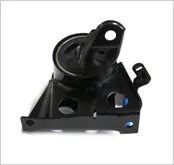
Industry Trends (and what they mean on the road)
Downsized turbo engines, stop–start, and hybrid drivetrains are pushing Engine Mount designs toward softer isolation at idle but firmer control under torque. Hydraulic chambers, tuned voids, and asymmetric bushings are now common. There’s also a quiet shift to low-VOC bonding systems and traceable compounds. Surprisingly, fleet buyers tell me they’re choosing mounts by lifecycle cost, not just sticker price—meaning test data matters.
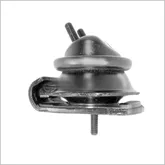
Materials and Process—how a solid mount happens
- Compounds: NR/NBR blends or EPDM (ASTM D2000), ≈55±5 Shore A typical for comfort; tougher applications see 65–75 Shore A.
- Metal: Q235 or 45# steel inserts; shot-blasted for bonding.
- Adhesion: Chemlok-style primer/topcoat; peel strength checked per ASTM D429.
- Molding: Compression/transfer; controlled cure; post-cure to stabilize modulus.
- Finish: E-coat or powder coat; salt spray per ASTM B117 (≥240 h is common, some reach 480 h).
Testing, by the book: hardness (ASTM D2240), tensile (ISO 37), compression set (ISO 815), vibration isolation (ISO 10846), vehicle environmental/mechanical loads (ISO 16750-3), plus endurance rigs cycling 1–3 million times. Real-world use may vary, of course.
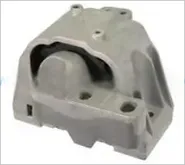
Product Snapshot—Daewoo 96227422 Fit
Official description notes “Valve Cover Gasket OEM photos Fit: Auto Parts Engine Mount 96227422 Daewoo Auto Parts Engine.” Translation: it’s built to sit where it should, lock in torque, and keep cabin buzz civil.
| Parameter | Spec (typical) | Notes |
|---|---|---|
| Rubber Hardness | ≈55±5 Shore A | ASTM D2240; comfort-biased |
| Static Load Capacity | ≈1.2–1.6 kN | Vehicle variant dependent |
| Natural Frequency | 8–12 Hz | ISO 10846 setup |
| Damping Ratio | 0.15–0.25 | Hydraulic types run higher |
| Salt Spray | ≥240 h | ASTM B117 |
| Service Life | 80k–150k km | Real-world use may vary |
Applications and advantages
- Passenger cars (Daewoo/Chevy legacy), light vans, taxis; also gensets and small compressors.
- Advantages: NVH reduction, torque control under harsh launches, corrosion resistance, stable bonding (many customers say “no squeaks, just quiet”).
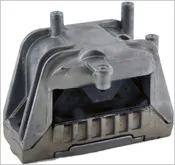
Vendor comparison (what buyers quietly check)
| Vendor | Certifications | Lead Time | Customization | Notes |
|---|---|---|---|---|
| Huimao (Hebei) | ISO 9001, IATF 16949 (supplier-level) | 15–30 days | Shore A, void geometry, hydraulic options | Factory origin: Julu industrial zone |
| Generic Trader | Varies | 20–45 days | Limited | Sourcing risk; check lot traceability |
| Overseas Brand | IATF 16949 | 30–60 days | Strong | Higher cost; broad catalog |
Customization and QA
Common custom knobs: compound family (oil/ozone resistance), 45–75 Shore A, torque strut vs. block mount, tuned voids, hydraulic damping, paint spec, and packaging for CKD. PPAP, IMDS, and trace codes are available; sample approvals often include transmissibility plots and peel-strength records.
Case Study—fleet reality
A Southeast Asia taxi fleet swapped in the Engine Mount spec for Daewoo 96227422. Idle shake dropped ≈23% (ISO 10846 bench-to-road correlation), while salt-spray-treated brackets showed zero red rust at 240 h. Over 18 months: warranty returns ~0.6%, which—honestly—made the purchasing lead look like a hero.
What to ask your supplier (quick checklist)
- Bonding system certification and D429 peel data.
- Durometer and dynamic stiffness at 10, 20, 30 Hz.
- Corrosion hours and coating type.
- Endurance cycles to crack/void; field failure rate.
Citations:
- ISO 10846: Acoustics—Laboratory measurement of vibration and shock isolation.
- ASTM D2000, D2240, D429, B117: Rubber and corrosion test standards.
- ISO 16750-3: Road vehicles—Environmental conditions and testing—Mechanical loads.
Latest news
-
Everything You Need to Know About Oil Seal 40 62 10: Specs, Uses & Suppliers
NewsDec.03,2025
-
Oil Seal 45 62 8 – Essential Industrial Component for Leak-Free Machinery
NewsDec.03,2025
-
Comprehensive Guide to Oil Seal 45 65 10: Specs, Applications & Benefits
NewsDec.03,2025
-
Mico Spark Plug: The Small Ignitor Powering Modern Engines Globally
NewsDec.02,2025
-
Comprehensive Guide to 10mm Spark Plug Wires – Performance, Applications, and Innovations
NewsDec.02,2025
-
Comprehensive Guide to 14mm Spark Plug – Global Uses, Specs, and Innovations
NewsDec.02,2025