Oct . 20, 2025 12:30 Back to list
Coolant Flange - Leak-Proof, OEM Fit, High-Temp Durable
A Field Note on the Coolant Flange: Specs, Trends, and Real-World Lessons
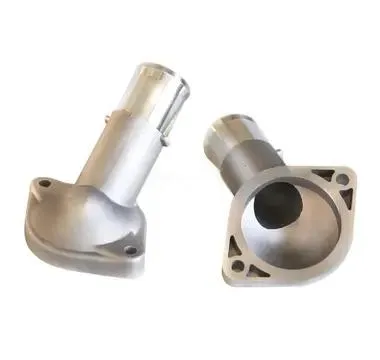
If you’ve ever chased a mystery coolant loss on a Golf 4 or an old Polo, you already know this little part can bring a big headache. The Coolant Flange—in this case the 06A121133D fitment for VW/AUDI GOLF4/POLO 1.6 A—doesn’t grab headlines, but it sits at the crossroads of thermal management, sealing, and assembly efficiency. Made in the julu industrial zone, xingtai city, hebei province, this is one of those components where material science and practical design quietly matter a lot.
What’s changing in the industry (and why you should care)
Two trends stand out. First, OEMs keep pushing for lighter, corrosion-proof, recyclable plastics—think glass-fiber reinforced PA—for underhood parts. Second, EVs are multiplying coolant circuits (battery, inverter, e-motor), which raises the bar for sealing reliability and dimensional stability. Honestly, even in ICE platforms, warranty teams now ask for better pressure-cycle durability and tighter QC traceability.
Key specifications (real-world values, not just brochure talk)
| Part Fitment | VW/AUDI 06A121133D (Golf 4 / Polo 1.6 A) |
| Base Material | PA66-GF30 (≈30% glass fiber) or equivalent; O-ring: NBR/FKM (app-dependent) |
| Operating Temp | -40 °C to +120 °C continuous; peaks ≈135 °C |
| Working Pressure | 0.9–1.5 bar typical; burst test ≥5 bar (lab) |
| Coolant Compatibility | VW G11/G12/G12++/G13 coolants; SAE J1034 coolant systems |
| Service Life | Around 150,000–200,000 km in normal use (may vary) |
How it’s made (quick process flow)
Material selection → mold design (gated for fiber alignment) → injection molding → CNC de-flash and groove finishing → O-ring fit and visual check → 100% air-leak test (≈2.0 bar, 60 s) → thermal cycling (sample, -40~120 °C, 300–500 cycles) → dimensional audit (critical ±0.10 mm) → packaging with traceability label. Testing references often include ISO 16750 environmental sequences; dimensional checks per customer drawing; salt-fog only if metal clips are included.
Where it shows up
- Passenger cars: VW/Audi small-displacement platforms
- Reman centers: preventive replacement with timing-belt/water-pump jobs
- Light commercial fleets: high idle-time, hot climates
Vendor snapshot (what buyers ask me, bluntly)
| Vendor | Material/Build | Lead Time | Certifications | Customization |
|---|---|---|---|---|
| Huimao (Hebei) | PA66-GF30; precise O-ring groove | ≈15–25 days | IATF 16949-aligned QC (ask for audit) | Logo, packaging, O-ring compound, ports |
| Marketplace Brand | Varies; mixed resin lots | Stock/fast ship | Supplier-specific | Limited |
| OE Dealer | OEM spec | Immediate | OEM approvals | None |
Test data and standards (abridged)
Sample lab results: no leakage at 2.0 bar/60 s; burst at ≈6.2 bar (23 °C); thermal cycling 500 cycles, pass; dimensional CpK ≥1.33 on neck OD. Standards commonly referenced: IATF 16949 quality systems; ISO 16750 environmental; SAE J2044 for quick-connect interfaces; VW G12/G13 coolant compatibility. To be honest, real-world life still hinges on installation torque and coolant quality.
Customization ideas
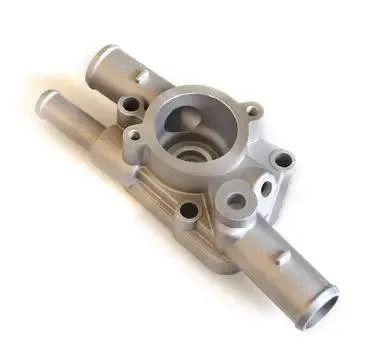
For fleets or reman packs: specify FKM O-rings for high-temp duty, add laser-coded traceability, tweak sensor boss angle by a few degrees for tool clearance, and request moisture-barrier packaging. Many customers say this small stuff reduces comebacks—surprisingly noticeable over a year.
Quick case study
A taxi co-op running Polo 1.6 A units in a hot coastal city switched to a reinforced Coolant Flange with FKM O-rings. After 9 months, they reported fewer top-ups and a drop in coolant smell complaints in the cabin. Not a peer-reviewed paper, sure, but the warranty ledger was happy.
Final buying notes
- Match part code (06A121133D) and check port orientation.
- Inspect the sealing surface; reject any sink marks near the O-ring groove.
- Use fresh G12/G13 coolant and new clamps to give the Coolant Flange a fair chance.
Citations
- IATF 16949:2016 – Automotive Quality Management System. https://www.iatfglobaloversight.org
- ISO 16750 (Road vehicles — Environmental conditions and testing). https://www.iso.org
- SAE J2044 – Quick Connect Coupling Specification for Liquid Fuel and Vapor/Emissions Systems. https://www.sae.org
- Volkswagen TL 774 (G11/G12/G12+/G12++/G13 coolant specifications). https://www.volkswagenag.com
Latest news
-
Everything You Need to Know About Oil Seal 40 62 10: Specs, Uses & Suppliers
NewsDec.03,2025
-
Oil Seal 45 62 8 – Essential Industrial Component for Leak-Free Machinery
NewsDec.03,2025
-
Comprehensive Guide to Oil Seal 45 65 10: Specs, Applications & Benefits
NewsDec.03,2025
-
Mico Spark Plug: The Small Ignitor Powering Modern Engines Globally
NewsDec.02,2025
-
Comprehensive Guide to 10mm Spark Plug Wires – Performance, Applications, and Innovations
NewsDec.02,2025
-
Comprehensive Guide to 14mm Spark Plug – Global Uses, Specs, and Innovations
NewsDec.02,2025