Oct . 07, 2025 09:45 Back to list
Control Valve with Smart Positioner—SIL/ATEX Certified?
Field Notes from the Flow-Control Trenches
If you work around process lines, you know the heartbeat of a loop is the Control Valve. To be honest, most days it’s not glamorous—until a loop hunts or a packing set weeps at 2 a.m. and production calls. That’s when a reliable Control Valve pays for itself, quickly.
This year’s trend? Smarter positioners, lower fugitive emissions, and tighter characterization. In fact, many customers say what they want is predictable Cv with fewer surprises during commissioning. It seems that diagnostics over HART/Modbus is table stakes now; SIL-ready trims are climbing, too.
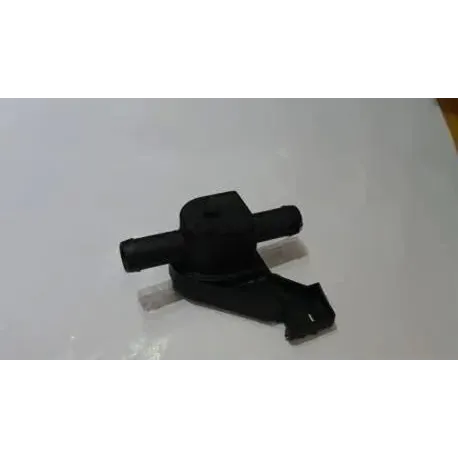
Technical Snapshot
| Body materials | WCB, CF8/CF8M, duplex; optional NACE-compliant trims |
| Sizes / Ratings | DN15–DN200 (½"–8"); PN16–PN100 / Class 150–600 |
| Cv range | ≈ 0.1 to 400 (characterized plug, equal-%/linear) |
| Leakage class | ANSI/FCI 70-2 Class IV–VI; seat test per API 598 |
| Temperature | -29 °C to 230 °C (higher with metal seats; real-world use may vary) |
| Actuation | Pneumatic diaphragm/PISTON, electric; 4–20 mA/HART; fail-open/close |
| Sealing | PTFE, FKM, NBR; ISO 15848 LD packing options |
| Ends | RF flanged, threaded, welded; ASME B16.34/B16.5 |
Where a Control Valve earns its keep
- Refining and chemicals: flow, pressure, and level loops; anti-cavitation trims for flashing service.
- Power and HVAC: steam PRVs, chilled water balancing—actually big energy savers.
- Water and wastewater: chlorine dosing, aeration control, surge relief.
- Automotive and machinery: hydraulic test stands, thermal oil skids, engine labs.
Process, testing, and service life (real shop talk)
Bodies are cast or forged, then CNC machined. Seats get lapped; trims hard-faced (Stellite or 17-4PH) if erosion is expected. Every Control Valve is hydro-tested (API 598), stroke-tested 100%, and if you ask—helium sniff for tight packing. Typical service life? ≈ 1–3 million cycles for pneumatic units in clean service; more with dry instrument air and proper sizing. Origin matters, too: these units are built in Julu Industrial Zone, Xingtai City, Hebei Province, with ISO 9001 quality discipline and PED mindset.
Vendor landscape (my quick comparison)
| Vendor | Certs | Lead time | Price trend | Notes |
|---|---|---|---|---|
| Huimao | ISO 9001, PED-ready, FCI leakage test | ≈ 3–6 weeks | Value | Good customization; responsive post-sale, customers say. |
| Vendor A | ISO 9001, SIL docs | 8–12 weeks | Premium | Top-tier diagnostics; higher cost. |
| Vendor B | CE, RoHS (electric) | 4–8 weeks | Mid | Great for HVAC/utility loops. |
Customization that actually matters
Options include low-noise cages, anti-cavitation multi-stage trims, NACE MR0175 wetted parts, ISO 15848 packings, and explosion-proof positioners. As a rule, specify medium, temperature, pressure, target Cv, turndown, and fail action—your Control Valve will thank you later.
Quick case notes
- Refinery debottleneck: equal-% trims cut loop oscillation by ~28%; operators were frankly surprised.
- Chilled-water plant: electric Control Valve with linear trim improved ΔT by 1.8 °C; energy down ≈ 7%.
- Automotive test stand: high-cycle pneumatic unit ran 2.2M cycles before packing refresh; maintenance time 40 minutes, crew said.
Standards and data points referenced: IEC 60534 sizing, ISA/FCI 70-2 leakage, API 598 pressure tests, ASME B16.34 bodies, SIL documentation when specified. Certificates available: ISO 9001, PED (on request), material traceability (EN 10204 3.1).
Authoritative citations
- IEC 60534 Control Valves – Sizing and Selection. International Electrotechnical Commission. https://webstore.iec.ch
- ANSI/ISA-75 and ANSI/FCI 70-2 Control Valve Seat Leakage. International Society of Automation. https://www.isa.org
- API 598 Valve Inspection and Testing. American Petroleum Institute. https://www.api.org
- ASME B16.34 Valves—Flanged, Threaded, and Welding End. The ASME. https://www.asme.org
- ISO 15848 Industrial Valves—Fugitive Emissions. International Organization for Standardization. https://www.iso.org
- NACE MR0175/ISO 15156 Materials for H2S Service. AMPP (NACE). https://www.ampp.org
- Pressure Equipment Directive 2014/68/EU (PED). European Commission. https://single-market-economy.ec.europa.eu
Latest news
-
Everything You Need to Know About Oil Seal 40 62 10: Specs, Uses & Suppliers
NewsDec.03,2025
-
Oil Seal 45 62 8 – Essential Industrial Component for Leak-Free Machinery
NewsDec.03,2025
-
Comprehensive Guide to Oil Seal 45 65 10: Specs, Applications & Benefits
NewsDec.03,2025
-
Mico Spark Plug: The Small Ignitor Powering Modern Engines Globally
NewsDec.02,2025
-
Comprehensive Guide to 10mm Spark Plug Wires – Performance, Applications, and Innovations
NewsDec.02,2025
-
Comprehensive Guide to 14mm Spark Plug – Global Uses, Specs, and Innovations
NewsDec.02,2025