Oct . 13, 2025 13:00 Back to list
Auto Parts Crankshaft Oil Seal OEM 90311-32020 - Leak-Proof
Field Notes on Auto Parts Crankshaft Oil Seal OEM 90311-32020
If you work around powertrains long enough, you learn this quickly: a crank seal looks simple until it isn’t. The Auto Parts Crankshaft Oil Seal OEM 90311-32020 sits right at that intersection of “small part, big consequences.” Sourced from Julu industrial zone, Xingtai city, Hebei province—an area that’s quietly become a seal-making hub—it reflects a broader trend I keep seeing: tighter emission rules, thinner multigrade oils, and longer drain intervals pushing seal design to be smarter, not just cheaper.
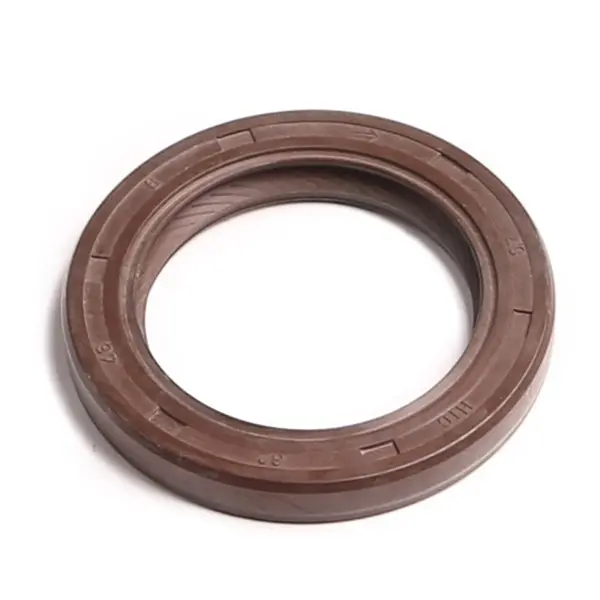
Technical specs at a glance
Below are typical engineering targets I see in real-world use (lab values can vary a hair, to be honest):
| OEM code | 90311-32020 |
| Lip design | Single or double-lip with dust lip (application-driven) |
| Elastomers | NBR, FKM (Viton), ACM; PTFE-lip option for high-temp |
| Spring | SUS304 garter spring |
| Operating temp | NBR ≈ -40 to 120°C; FKM ≈ -30 to 200°C |
| Permissible pressure | Up to ≈0.05 MPa continuous (non-pressurized crankcases) |
| Peripheral speed | Up to ≈12 m/s (real-world use may vary) |
| Shaft finish | Ra 0.2–0.8 µm; hardness ≥55 HRC recommended |
| Standards | ISO 6194, DIN 3760, ASTM D2000 (material classification) |
| Service life | ≈80,000–150,000 km depending on oil, heat, and shaft condition |
Process flow and quality checkpoints
- Materials: NBR/FKM compounds mixed to ASTM D2000; anti-wear and anti-swelling packages for modern low-SAPS oils.
- Methods: compression/injection molding, post-cure, OD grinding, PTFE-lip skiving (optional), phosphating or rubber-coated OD.
- Testing: Shore A hardness, tensile/elongation, oil immersion (ASTM D471), runout tests, leak and torque on rotary rigs per ISO 6194.
- Traceability: batch-coded springs and elastomer lots; PPAP/IATF-16949 style documentation on request.
Where it shines
Front or rear crank positions in gasoline and light-duty diesel engines; also finds its way into generator sets and compact industrial drives. Many customers say the Auto Parts Crankshaft Oil Seal OEM 90311-32020 handles modern synthetics well, especially in hotter climates. I guess that aligns with the FKM option.
Vendor snapshot (practical view)
| Criteria | Huimao (Xingtai) | Generic Marketplace | OEM Dealership |
|---|---|---|---|
| Certifications | ISO 9001 / IATF 16949 (on request) | Varies | OEM |
| Material options | NBR, FKM, PTFE-lip | Unspecified | OEM grade |
| Lead time | ≈7–20 days | Unpredictable | Stock-dependent |
| Customization | Yes (lip geometry, preload, packaging) | Limited | No |
| Typical price | Mid-range | Low | High |
Real-world data and feedback
On a bench rig per ISO 6194, an FKM-lip Auto Parts Crankshaft Oil Seal OEM 90311-32020 ran at 6 m/s, 140°C oil, and showed leakage <1 ml/100 h with friction torque trimmed ≈8% versus a legacy NBR build. In the field, a taxi fleet (hot, stop–go duty) reported roughly one extra oil-change interval before seepage—small win, but it adds up. Results always depend on shaft finish and runout, of course.
Customization notes
- Lip preload tuning for low-viscosity 0W-8/0W-16 oils.
- Anti-dust features for off-road or sandy regions.
- Packaging with batch QR traceability for service networks.
Final thought
Seals live or die by surface prep and installation. A clean bore, proper depth, and a touch of assembly lube—sounds basic, but surprisingly that’s what separates a 30k-km weep from a 120k-km non-event. This is one of those parts where diligence wins.
Authoritative references
- ISO 6194 – Rotary shaft lip-type seals. https://www.iso.org
- DIN 3760 – Rotary shaft lip seals. https://www.din.de
- ASTM D2000 – Standard classification system for rubber products. https://www.astm.org
- IATF 16949 – Automotive quality management. https://www.iatfglobaloversight.org
Latest news
-
Everything You Need to Know About Oil Seal 40 62 10: Specs, Uses & Suppliers
NewsDec.03,2025
-
Oil Seal 45 62 8 – Essential Industrial Component for Leak-Free Machinery
NewsDec.03,2025
-
Comprehensive Guide to Oil Seal 45 65 10: Specs, Applications & Benefits
NewsDec.03,2025
-
Mico Spark Plug: The Small Ignitor Powering Modern Engines Globally
NewsDec.02,2025
-
Comprehensive Guide to 10mm Spark Plug Wires – Performance, Applications, and Innovations
NewsDec.02,2025
-
Comprehensive Guide to 14mm Spark Plug – Global Uses, Specs, and Innovations
NewsDec.02,2025